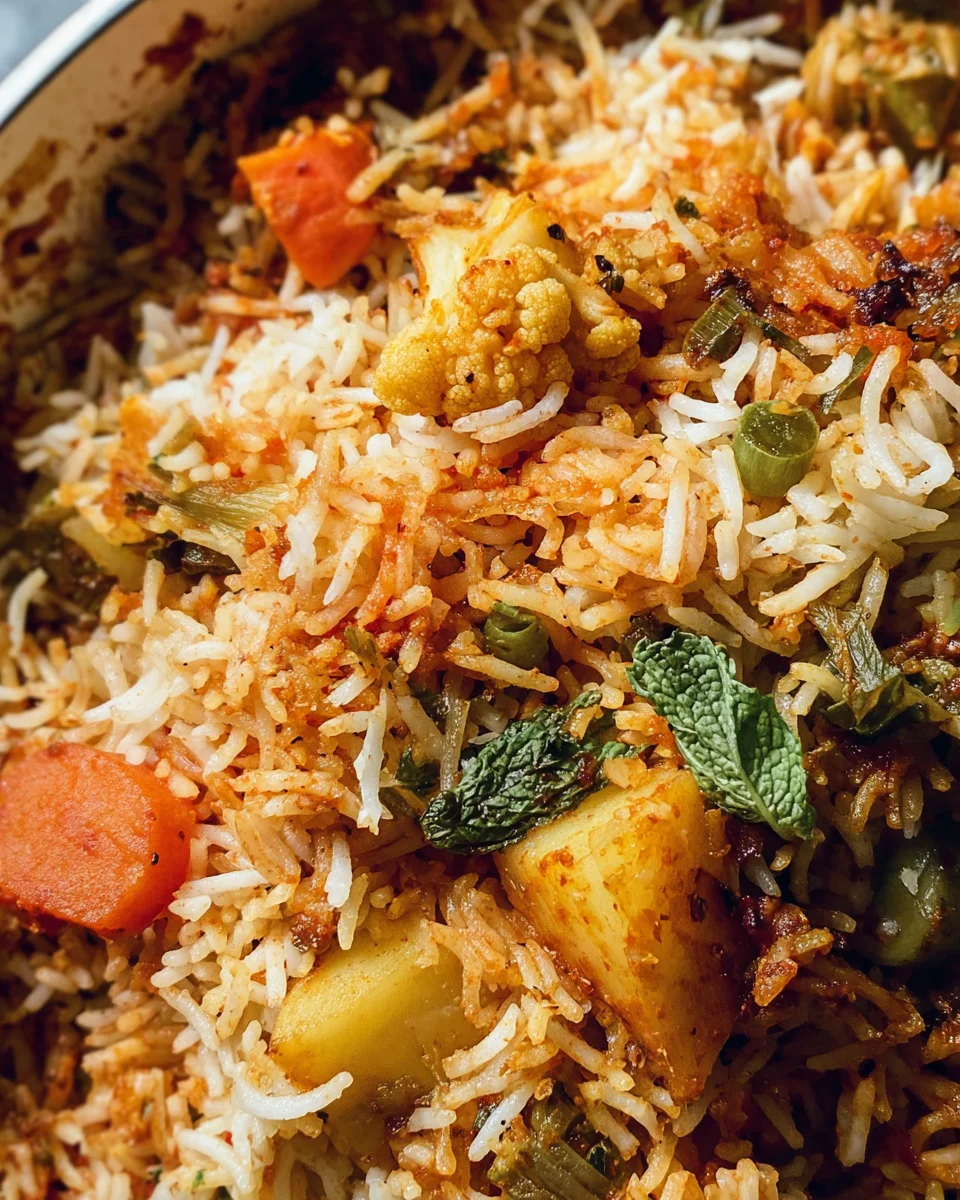
Aromatic and flavorful restaurant style Vegetable Biryani is a delightful dish that’s perfect for any occasion. Packed with vibrant vegetables, fragrant spices, and a medley of herbs, this biryani is an explosion of flavors in every bite. Whether it’s a family dinner, a festive gathering, or a cozy night in, this dish will impress your guests and satisfy your cravings.
Jump to:
- Why You’ll Love This Recipe
- Tools and Preparation
- Essential Tools and Equipment
- Importance of Each Tool
- Ingredients
- For the Rice
- For the Vegetables
- Other Ingredients
- For the Spices and Garnish
- How to Make Restaurant Style Vegetable Biryani
- Step 1: Prepare the Rice
- Step 2: Cook the Whole Spices
- Step 3: Sauté Onions & Cashews
- Step 4: Add Vegetables
- Step 5: Combine Rice & Spices
- Step 6: Prepare Yogurt Mixture
- Step 7: Final Cooking Steps
- Step 8: Finish & Serve
- How to Serve Restaurant Style Vegetable Biryani
- With Raita
- Accompanied by Salads
- Garnished with Nuts
- Served with Pickles
- Accompanied by Papadum
- How to Perfect Restaurant Style Vegetable Biryani
- Best Side Dishes for Restaurant Style Vegetable Biryani
- Common Mistakes to Avoid
- Storage & Reheating Instructions
- Refrigerator Storage
- Freezing Restaurant Style Vegetable Biryani
- Reheating Restaurant Style Vegetable Biryani
- Frequently Asked Questions
- How can I make my Restaurant Style Vegetable Biryani spicier?
- Can I use brown rice instead of basmati?
- What vegetables work best in this recipe?
- Is this Restaurant Style Vegetable Biryani vegan-friendly?
- Final Thoughts
- 📖 Recipe Card
Why You’ll Love This Recipe
- Rich Flavor: The combination of spices and fresh herbs creates a symphony of tastes that elevate the humble vegetable biryani.
- Vegetable Goodness: Loaded with nutrient-dense vegetables like potatoes, carrots, and beans, this dish is both filling and healthy.
- Versatile Dish: Perfect as a main course or side dish, it pairs well with raita or salad for a complete meal.
- Easy to Make: With straightforward steps and common ingredients, preparing this biryani at home is simple and rewarding.
- Impressive Presentation: The vibrant colors of the vegetables and saffron make it a visually stunning dish for guests.
Tools and Preparation
Before you start cooking your restaurant style Vegetable Biryani, gather your tools to ensure a smooth cooking experience.
Grab This Chef Knife Now - Almost Gone!

- Stays Razor-Sharp: Ice-hardened blade keeps its edge longer than ordinary knives
- Superior Grip Control: Unique finger hole design gives you perfect balance and safety
- Built to Last a Lifetime: Premium stainless steel blade with elegant beech wood handle
Customer Reviews ★★★★★
Essential Tools and Equipment
- Heavy-bottomed pot or pressure cooker
- Wooden spoon or spatula
- Knife and chopping board
- Measuring cups and spoons
Importance of Each Tool
- Heavy-bottomed pot: Ensures even heat distribution, preventing the rice from burning.
- Wooden spoon: Gentle on cookware and helps to mix ingredients without damaging them.
- Knife and chopping board: Essential for preparing fresh vegetables quickly and efficiently.
Ingredients
Aromatic and flavorful restaurant style Vegetable Biryani! This fragrant biryani is packed with veggies, spices, herbs, and nuts for an explosion of flavors in every bite!
For the Rice
- 1 cup basmati rice (200 grams, soaked in 3 cups (24 oz) water for 30 minutes)
- 6 whole green cardamom (divided)
- 4 cloves (divided)
- 1 teaspoon salt (divided)
- 1.5 tablespoon +1 teaspoon ghee (divided)
For the Vegetables
- 2 medium red onion (thinly sliced, divided)
- 2 tablespoons broken cashews
- 1 small potato (cubed)
- 1/2 cup cauliflower florets (medium sized florets)
- 1 medium carrot (cut diagonally)
- 5-6 green beans (cut diagonally)
Other Ingredients
- 2 tablespoons milk (30 ml)
- Saffron strands (generous pinch)
- 1 inch ginger (crushed)
- 4-5 large garlic cloves (crushed)
- 2 green chilies (crushed)
- 1.5 tablespoons oil (22 ml)
- 1/2 teaspoon cumin seeds (I used shahi jeera)
- 1 inch cinnamon stick
- 1 bay leaf
- 3 whole black peppercorns
For the Spices and Garnish
- 1/3 cup plain yogurt (whisked at room temperature; can add 1/4 teaspoon cornstarch to prevent curdling)
- 1.5 teaspoon biryani masala (or use 1 teaspoon garam masala)
- 1/2 teaspoon kashmiri red chili powder (or use regular chili powder for heat)
- 1/4 cup water
- 2 tablespoons chopped cilantro
- 2 tablespoons chopped mint
- 1.5 teaspoon rose water or kewra water
How to Make Restaurant Style Vegetable Biryani
Step 1: Prepare the Rice
Soak the basmati rice in water for about 30 minutes. This step helps achieve fluffy rice. Drain the rice afterward.
Step 2: Cook the Whole Spices
In a heavy-bottomed pot, heat 1.5 tablespoons of ghee over medium heat. Add half of the whole green cardamom pods, cloves, cumin seeds, cinnamon stick, bay leaf, and black peppercorns. Sauté until fragrant.
Grab This Chef Knife Now - Almost Gone!
- Stays Razor-Sharp: Ice-hardened blade keeps its edge longer than ordinary knives
- Superior Grip Control: Unique finger hole design gives you perfect balance and safety
- Built to Last a Lifetime: Premium stainless steel blade with elegant beech wood handle
Customer Reviews ★★★★★
Step 3: Sauté Onions & Cashews
Add thinly sliced onions to the pot. Cook until golden brown. Stir in broken cashews until they are lightly toasted.
Step 4: Add Vegetables
Mix in cubed potatoes, cauliflower florets, carrot slices, and green beans. Cook until vegetables are slightly tender.
Step 5: Combine Rice & Spices
Add the soaked rice along with remaining whole spices into the pot. Carefully mix to combine all ingredients.
Step 6: Prepare Yogurt Mixture
In a bowl, whisk yogurt with milk, crushed ginger, garlic cloves, green chilies, biryani masala, kashmiri red chili powder, salt to taste, saffron strands soaked in water/milk mixture. Pour this mixture over the rice.
Step 7: Final Cooking Steps
Add water as needed to cover the rice mixture evenly. Bring it to a boil then reduce heat to low. Cover tightly with a lid and cook for about 25–30 minutes or until rice is fully cooked.
Step 8: Finish & Serve
Once cooked, gently fluff up the biryani with a fork. Garnish with chopped cilantro and mint before serving hot.
Enjoy your homemade restaurant style Vegetable Biryani!
How to Serve Restaurant Style Vegetable Biryani
Serving Restaurant Style Vegetable Biryani is an art that enhances its deliciousness. The right accompaniments can elevate your biryani experience, making every bite more enjoyable.
With Raita
- Cucumber Raita: A refreshing mix of yogurt, grated cucumber, and spices that cools down the heat of the biryani.
- Onion Raita: Sliced onions mixed with yogurt and spices for a tangy contrast.
Accompanied by Salads
- Kachumber Salad: A fresh salad made with diced tomatoes, cucumbers, and onions for a crunchy bite.
- Mint and Coriander Salad: A vibrant mix of herbs that adds freshness to your meal.
Garnished with Nuts
- Fried Cashews: Adding a nutty crunch that complements the soft texture of the biryani.
- Almond Flakes: Lightly toasted almond flakes provide added flavor and crunch.
Served with Pickles
- Mixed Indian Pickle: A tangy accompaniment that enhances the flavors of the biryani.
- Mango Pickle: Adds a sweet and spicy kick to your meal.
Accompanied by Papadum
- Crispy Papadum: A crunchy side that pairs well with the soft biryani, adding texture to each bite.

How to Perfect Restaurant Style Vegetable Biryani
To achieve the perfect Restaurant Style Vegetable Biryani, attention to detail is key. Here are some tips for ensuring your biryani is full of flavor and aroma.
- Use Fresh Ingredients: Fresh vegetables and spices enhance the overall taste of your biryani.
- Soak Rice Properly: Soaking basmati rice for at least 30 minutes ensures fluffy grains that cook evenly.
- Layer Ingredients Thoughtfully: Layering rice over vegetables allows flavors to meld beautifully during cooking.
- Control Cooking Time: Cook on low heat after layering. This prevents burning while allowing flavors to infuse thoroughly.
- Add Aromatics: Incorporating ingredients like saffron or rose water adds a luxurious fragrance to your dish.
- Rest Before Serving: Letting the biryani rest for a few minutes after cooking allows flavors to settle and intensify.
Best Side Dishes for Restaurant Style Vegetable Biryani
Pairing side dishes with Restaurant Style Vegetable Biryani enhances your dining experience. Here are some great options:
- Mango Chutney: A sweet and tangy condiment that complements the spices in the biryani beautifully.
- Aloo Gobi: A spiced potato and cauliflower dish that complements the flavors of vegetable biryani.
- Paneer Tikka: Marinated paneer grilled to perfection adds richness alongside your biryani.
- Dal Makhani: Creamy lentils provide protein and balance against the carb-heavy biryani.
- Vegetable Kurma: A mildly spiced vegetable curry that pairs well with rice dishes like biryani.
- Chana Masala: Spicy chickpeas add texture and additional protein to your meal.
- Samosas: Crispy pastries filled with spiced potatoes make for a delightful accompaniment.
- Bhindi Masala: Stir-fried okra seasoned with spices creates a crispy side that contrasts nicely with rice dishes.
Common Mistakes to Avoid
When making Restaurant Style Vegetable Biryani, there are some common pitfalls you should be aware of to ensure your dish turns out perfectly.
- Using unsoaked rice: Not soaking basmati rice can lead to uneven cooking. Always soak the rice for at least 30 minutes for better texture and flavor.
- Overcooking the vegetables: Cooking the vegetables too long makes them mushy. Sauté them just until tender to maintain their shape and flavor.
- Skipping the spices: Neglecting the spices results in bland biryani. Use the full range of spices listed in the recipe to achieve that authentic taste.
- Not layering correctly: Layering ingredients improperly can affect cooking. Follow layering instructions precisely to create distinct flavors and textures.
- Ignoring resting time: Serving immediately after cooking can spoil the flavors. Allow your biryani to rest for about 10 minutes before serving for best results.

Storage & Reheating Instructions
Refrigerator Storage
- Store leftover Restaurant Style Vegetable Biryani in an airtight container.
- It will last for up to 3 days in the refrigerator.
Freezing Restaurant Style Vegetable Biryani
- Place cooled biryani in a freezer-safe container or bag.
- It can be frozen for up to 2 months.
Reheating Restaurant Style Vegetable Biryani
- Oven: Preheat the oven to 350°F (175°C). Place biryani in an oven-safe dish, cover with foil, and heat for about 20 minutes.
- Microwave: Transfer biryani to a microwave-safe bowl, cover loosely, and heat on medium power for 2-3 minutes until warm.
- Stovetop: In a pan, add a splash of water and reheat on low heat while stirring occasionally until heated through.
Frequently Asked Questions
Here are some common questions about making Restaurant Style Vegetable Biryani.
How can I make my Restaurant Style Vegetable Biryani spicier?
You can add more green chilies or increase the amount of kashmiri red chili powder according to your taste preference.
Can I use brown rice instead of basmati?
Yes, but brown rice requires longer cooking time. Adjust water quantity and cooking duration accordingly.
What vegetables work best in this recipe?
Feel free to customize with veggies like peas, bell peppers, or zucchini for added color and nutrition.
Is this Restaurant Style Vegetable Biryani vegan-friendly?
Yes, by substituting ghee with oil and ensuring that your yogurt is plant-based, you can make it vegan-friendly.
Final Thoughts
This Restaurant Style Vegetable Biryani is not just delicious; it’s also incredibly versatile! You can easily customize it with your favorite vegetables or adjust the spices according to your preferences. Give it a try and enjoy a comforting meal that brings joy and warmth to your table!
Did You Enjoy Making This Recipe? Please rate this recipe with ⭐⭐⭐⭐⭐ or leave a comment.
📖 Recipe Card
PrintRestaurant Style Vegetable Biryani

Indulge in the rich, aromatic flavors of Restaurant Style Vegetable Biryani, a vibrant and satisfying dish that’s perfect for any occasion. This Indian classic combines fluffy basmati rice with an array of colorful vegetables, fragrant spices, and fresh herbs, creating an explosion of flavor that will delight your senses. Whether it’s a special family gathering or a cozy night in, this hearty biryani is sure to impress. The ease of preparation makes it accessible for home cooks of all skill levels, while its stunning presentation will make your meal memorable.
- Prep Time: 20 minutes
- Cook Time: 30 minutes
- Total Time: 50 minutes
- Yield: Serves 4
- Category: Main Course
- Method: Cooking
- Cuisine: Indian
Ingredients
- 1 cup basmati rice
- 2 medium red onions
- 1 small potato
- 1/2 cup cauliflower florets
- 1 medium carrot
- 5–6 green beans
- Fresh herbs: cilantro and mint
- Spices: cardamom, cloves, cinnamon, cumin seeds
- Ghee and oil for cooking
Instructions
- Soak the basmati rice in water for 30 minutes and drain.
- In a heavy-bottomed pot, heat ghee and sauté whole spices until fragrant.
- Add sliced onions and cook until golden brown; stir in cashews.
- Mix in cubed potatoes, cauliflower, carrots, and green beans until slightly tender.
- Combine soaked rice with sautéed vegetables and whole spices.
- Prepare a yogurt mixture with spices and pour over the rice.
- Add enough water to cover the mixture; bring to a boil then reduce heat to low and cover tightly for 25–30 minutes.
- Fluff the biryani gently before serving garnished with cilantro and mint.
Nutrition
- Serving Size: 1 cup (250g)
- Calories: 320
- Sugar: 3g
- Sodium: 450mg
- Fat: 12g
- Saturated Fat: 5g
- Unsaturated Fat: 7g
- Trans Fat: 0g
- Carbohydrates: 48g
- Fiber: 4g
- Protein: 8g
- Cholesterol: 15mg